Small Skills Studio ・ Communicate
One-page proposals built around the decision you need.
Build a one-page proposal with a clear decision, evidence, fair options and a request, using fictional examples
- 12lectures
- 32minof lessons
- 2try-it tools
- 261lines of course audio
What changes with this skill
- Write one sentence that states who must decide what, and by when
- Structure a one-page proposal around the main point, evidence, options and request
- Separate measured facts from estimates and give every number a unit and period
- Choose a table or chart and use whitespace and reading order deliberately
- Compare before-and-after versions and check whether the page supports a decision
What the course covers
Build the page step by step
First, you write one sentence that names the reader and the decision. Next, you build the page around four parts: the main proposal, the evidence, fair options and the request. You separate measured facts from estimates and add units and periods to every number. Then you shorten sentences without losing meaning, choose between a table and a chart, and use whitespace and reading order. In the final section, you organize a fictional improvement proposal, compare versions and check the finished page.
Try it first
Draft a one-page structure
Fill in the four boxes with a short, fictional proposal. The one-page sheet on the right builds itself.
Proposal (one page)
Put the decision in one sentence
Fill in who decides, what and by when to get the first line of your document.
Final check before sending
All 12 lectures, chapter by chapter
Open a lecture to read its key points. Press “▶ A line from this lecture” to hear one sentence of the course audio.

Chapter 1
Decide the purpose of the document
1.1Start with the decision
- Today's GoalFrom explanatory materials / To a single sheet that enables decisions
- Common Starting PointsWith just a heading like 'About Meetings' / The recipient's decision is unclear
- Make the Decision a Single SentenceReader: team leader / Decision: approve a two-week trial / Approval deadline: next meeting
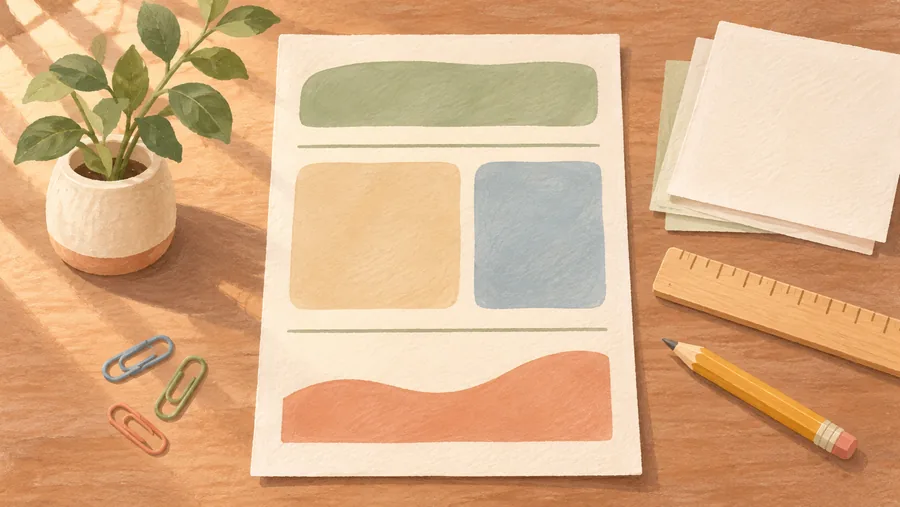
- Four Boxes on One SheetConclusion → Evidence / Options → Request
- Do Not Assert Effects DefinitivelyExpectation: Ten-minute reduction per session / Verification: Measure actual results after the trial
- Small Exercise'I want to organize the shared folder' / To whom, what, by when?
- Takeaway for TodayWhat you write first / is the single sentence of 'what to decide'
1.2Name the reader and the decision
- Combine the Reader and Decision into One SentenceCombine the reader and decision into one sentence / Verify with specific examples and exercises
- The Reader's RoleThe person being explained to / The person making the decision
- Specificize the DecisionJust want them to know? / Want approval?
- The Meaning of DeadlinesStart date and response deadline / Time for consideration
- Example of a Complete SentenceTo the manager / Requesting approval for trial
- Rewriting ExerciseI want to improve meetings / Add who, what, and when
- Answer and CheckCan the person make a decision? / Is the deadline clear?
1.3Plan before gathering information
- Design Before Gathering MaterialsDesign Before Gathering Materials / Verify with Specific Examples and Exercises
- Necessary QuestionsInformation Needed for Approval / Information Not to Gather
- Placement of InformationMatch Questions and Materials / Put Extras on a Separate Sheet
- Distinguish Hypothetical NumbersUnverified is Unverified / Fictional Examples Are Not Actual Results
- Order of InvestigationThings That Change Judgment / Verify on a Small Scale
- Design ExerciseWrite Three Questions / One Material at a Time
- Answers and TakeawaysDifficulties, Burdens, Verification / From Design to Collection
Chapter 2
Build the one-page structure
2.1Proposal, evidence, options and request
- Conclusion, Evidence, Options, and RequestsConclusion, Evidence, Options, and Requests / Verify with concrete examples and practice
- Four RolesProposal and Reason / Comparison and Judgment
- Conclusion and EvidenceNarrow down the scope of the test / Add numerical conditions
- Listing OptionsMaintain the status quo / Try on a small scale
- Example of a Completed RequestScope and period / Deadline for approval
- Reordering ExerciseCategorize four sentences / Find the missing section
- Answer and VerificationEvidence requires measurement conditions / Connect all four boxes to one point
2.2Separate facts from estimates
- Distinguishing Facts from ProjectionsDistinguishing Facts from Projections / Verify with Specific Examples and Practice
- Categorizing into Three TypesMeasured Data vs. Projections / Unconfirmed
- Fictional Measurement Record10 Searches / Average of 8 Minutes
- Estimating EffectivenessFrom 8 Minutes to 5 Minutes / A 3-Minute Reduction is a Projection
- Deciding on Verification MethodsSame Target and Same Records / Measure Preparation Time as Well
- Classification ExerciseRecord or Prediction? / Correcting Assertions
- Answers and VerificationDistinguish Goals from Assertions / Add Confirmation Methods
2.3Write informative headings
- Convey Meaning Through Headings AloneConvey Meaning Through Headings Alone / Verify with Specific Examples and Exercises
- Headings That Represent ContentOverview Does Not Convey Enough / Write What You Will Do
- Compare and ReviseProblem Point / Average of Eight Minutes for Search
- Maintain Consistent GranularityHeading Is the Main Point / Details Are in the Body Text
- Order of HeadingsFrom Proposal to Reason / From Comparison to Request
- Heading ExerciseBackground, Effect, Request / Rewrite These Three
- Answer and VerificationTrial Pre-sharing / Judgment by Next Regular Meeting
Chapter 3
Make it easy to read
3.1Shorten sentences without losing meaning
- Shortening SentencesShortening Sentences / Verify with Specific Examples and Exercises
- Decide What to KeepClaims, Conditions, Requests / Remove Only Redundancies
- Read the Pre-Revision TextLong Introduction / The Main Point is at the End
- Revise in Two StagesOne Folder / Try for Two Weeks
- Words That Should Not Be RemovedLimits on Target / Expressions of Expectation
- Exercise on ShorteningSplit One Sentence into Two / Keep the Conditions
- Answer and VerificationSeparate Preparation and Trial / Check for Changes in Meaning
3.2Choose a table or chart
- Choosing a table or chartStart with the reader's question / Use fictional examples to practice
- Match the visual to the questionTables: exact values and conditions / Charts: comparisons and trends
- Compare options fairlyUse the same criteria / Mark unknown values
- Bar chart conditionsKeep the same unit / Distinguish measurements and targets
- Reduce unnecessary decorationAvoid distorted shapes / Use meaningful labels and color
- Choose a visualTwo options: costs and setup time / Four weeks: changes in search time
- Example answersA table for several conditions / A line chart for change over time
3.3Whitespace and reading order
- Whitespace and Reading OrderWhitespace and reading order / Verify with examples and exercises
- Decide the Reading OrderConclusion first / Easier to find requests
- The Role of WhitespacePlace related items close together / Separate different topics
- Alignment ProcedureAlign the left edges / Align the height of headings
- Maintain Readable SizesDo not shrink text too much / Move details to a separate sheet
- Layout ExerciseDraw four frames / Follow the reading order with your finger
- Answer and VerificationConclusion in the top row / Decision items in the bottom row

Chapter 4
Complete the proposal
4.1Build a fictional improvement proposal
- Organizing a Hypothetical Business Process ImprovementOrganizing a Hypothetical Business Process Improvement / Verify with Specific Examples and Exercises
- Exercise Conditions10 Searches, Average 8 Minutes / Preparation Estimated at 40 Minutes
- Filling in the ConclusionOne Folder / Two-Week Trial
- Filling in the BasisAverage Value and Count / Effectiveness is Still Unconfirmed
- Filling in the OptionsMaintain Status Quo / Narrow Scope for Trial
- Filling in the RequestApproval This Week / Report Results After Trial
- Completing the ExerciseFill in Four Boxes / Leave Unconfirmed Items as Is
4.2Compare and revise your proposal
- Comparing Before and After CorrectionsComparing Before and After Corrections / Verify with Specific Examples and Exercises
- The Problem Before CorrectionWant to improve everything / Asserting effectiveness
- Correcting the ScopeFrom everything to one item / Specify the trial period
- Correcting the BasisExplain issues with numbers / Retain measurement conditions
- Correcting the RequestUnclear with 'please help us out' / Write decision criteria and deadline
- Self-Correction of Your MaterialsOne type at a time / From content to layout
- Perspectives for ComparisonDo not compare only by length / Compare by ease of decision
4.3Check the finished one-page proposal
- Final check of the one-page proposalCheck the decision, evidence and request / Review the finished page
- Criteria for CompletionWho, What, When / Basis and Options
- Check Numbers and TextUnits, Periods, Targets / Facts, Goals, Estimates
- Check AppearanceHeaders should show clear logic / Readable at actual size
- Pre-Distribution ConfirmationFictional instructional materials only / Check comments and history as well
- Final AssignmentComplete one page / Answer four questions
- Course SummaryDesign before writing / Assist small decisions
From the course audio
Lines from the course audio, one sentence at a time. Press to listen (in random order).
Udemy course
One-Page Proposals and Reports
Build a one-page proposal with a clear decision, evidence, fair options and a request, using fictional examples
Who this course is for
- Beginners who write workplace proposals or reports
- Professionals whose documents are long but do not lead to decisions
- Anyone who wants a repeatable one-page structure
- Learners who prefer fictional examples and short exercises
Requirements
- No design experience is required
- Paper, or a document or slide editor of your choice
Free preview lectures
- Start with the decision
- Name the reader and the decision
- Plan before gathering information
Videos load from YouTube (youtube-nocookie.com) only when you press ▶.
Frequently asked questions
What is this course about?
This beginner course is for anyone whose reports and proposals grow long and still do not lead to a decision. You will learn to start from the decision you need, then build a one-page proposal that states it clearly.
How long is the course?
Twelve lectures, about 32 minutes in total. Each lecture moves through explanation, examples, a short exercise and a review.
Who is it for?
Beginners who write workplace proposals or reports / Professionals whose documents are long but do not lead to decisions / Anyone who wants a repeatable one-page structure / Learners who prefer fictional examples and short exercises
What do I need before starting?
No design experience is required / Paper, or a document or slide editor of your choice
About the audio, illustrations and examples
The narration uses AI-generated voices, and the illustrations were created with generative AI. All examples, numbers and people are fictional; you never need to enter or submit real personal or workplace information.